Categories
Hydroponics

Hydroponic Systems in Pakistan

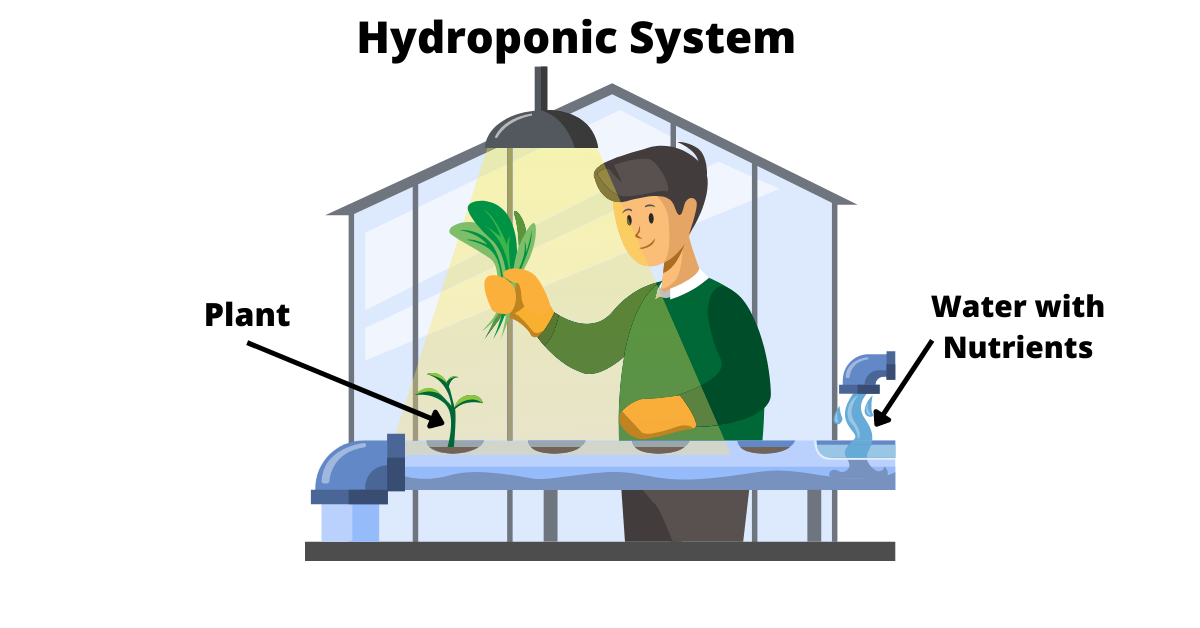
Hydroponic systems are possibly the future way to go, as water shortages occur in Pakistan, due to severe climate change. Hydroponics uses 90% less water than traditional farming methods, and production is significantly higher if you understand the right nutrients needed and temperatures for your hydroponic system.

There are many types of hydroponic systems that are suitable for use in Pakistan, the next part of the article will explain these.

Cost Per Acre for Hydroponics in Pakistan

The cost per acre in hydroponics in Pakistan are as follows:

  • Nutrients cost vary – about $10-$30 per acre per month
  • Pipe Material Cost (one time setup) – $1,000 per Acre, but can be lowered if you can get better deal on PVC pipes.
  • Water – cost of water per month will vary, but roughly would be $100 per month, but can be free if you use a water boring system.

Types of Hydroponic Systems

The different types of hydroponic systems include: Aeroponics, Soil-free hydroponics, Wicks systems, and Drip systems. Soil-free hydroponics utilizes organic or non-organic nutrients and coconut fiber. Wicks systems work by capillary action to deliver nutrients to plants. Drip systems use coconut fiber and coconut water as fertilizers. Soil-free hydroponic systems do not need a pump.

Aeroponics is a soil-free hydroponic system

An aeroponics system uses microdroplets of water to provide nutrients to the roots of plants. This system can use less water than hydroponic systems and 95% less water than outdoor farming. Aeroponic systems also do not require the use of rockwool, a fibrous material that is difficult to handle and cannot be recycled. It also reduces the risk of disease outbreaks.

Traditional hydroponic systems have roots submerged in water, and therefore need air pumps to provide sufficient oxygen to the roots. In aeroponic systems, the roots are exposed to the air and are spray misted with nutrient-rich water. Because the roots are suspended in the air, they get all of the oxygen and nutrients they need without any need for soil. Aeroponic systems are highly efficient in increasing yield and reducing cost.

Wicks systems work by capillary action

A wicks system has three main components: a reservoir, grow tray, and aeration system. The grow tray doesn’t use net pots, so the growing medium fills up the entire space. Seedlings are often planted directly into the growing medium. The wick system makes it easy to set up and maintain. Unlike traditional hydroponic systems, wick systems use no pots at all.

Water is taken up by the wick by capillary action. The nutrient solution is then sucked up by the growing media. This process is known as transpiration and results in the plant absorbing the nutrients and water evenly. However, there are a few limitations with this hydroponic system. You must regularly monitor the reservoir level and top up the growing medium as needed. Ideally, you should refilled the reservoir every week, as the nutrients in the growing medium decrease as the plants absorb them.

Soil-free hydroponics use organic or non-organic nutrients

Organic grow media such as coco or clay pebbles is another option. Net pots can hold the root system and nutrients, and a nutrient solution can be used to feed the roots of the plants. Bacteria colonies will form on the grow medium, converting the nutrient solution to a form that the plants can use. The plants will then grow in their net pots, producing a thriving hydroponic crop. You may have to experiment with the amount of nutrients and pH levels to get the perfect mix for your crops.

When choosing between organic and conventional fertilizers, remember that organic nutrients contain higher levels of important trace elements. Organic nutrients are usually better for soil health, and they feed the soil microbiology and boost the presence of Trichoderma. Conventional nutrients, on the other hand, do not contribute to the healthy development of soil. They also require constant applications of fertilizer, and they do not support the growth of beneficial soil microorganisms.

Drip systems use coconut fiber

Drip systems use coconut fiber to grow plants. Coconut coir is a 100% organic media made from coconut husk. It has a great Air to Water ratio. It also contains a combination of fine, medium, and coarse fibers, making it more free-draining and improving water holding capacity. Coco coir is screened, treated, graded, and compressed. When it comes into contact with water, it expands up to four times its original size. It’s lightweight and convenient to use, too.

Drip systems have two basic advantages. They allow excess water to drain back to the reservoir, and they are often used in smaller home-based drip hydroponic systems. However, the wastewater from these systems can cause problems with the pH level of the reservoir water. And they require periodic maintenance. Despite the advantages, they are not suitable for everyone. The most popular type of drip system is the one made from coconut fiber.

Soil-free hydroponics requires a timer

Soil-free hydroponics can be used to grow nearly any type of plant. However, the main components of this system are pumps, nutrient solution, and timer. You will need a timer to maintain the proper balance between the plants and nutrient solution. These components are crucial for hydroponics to work efficiently. Once you have them, the next step is to set the timer and monitor your plants.

When using soil-free hydroponics, you must have a timer so that you can monitor your plants’ growth. If you do not have a timer, you’ll have to manually monitor your plants. This will prevent them from growing too quickly or losing their nutrients. To control the time of day that your plants need to grow, you should set it on a timer.

Categories
General Short Courses

Benefits of a Short Course for Individuals

If you’re not sure whether a Short Course is for you, keep reading to discover more. It’s possible to pursue your passion and gain a professional skill that matches your enthusiasm. This way, you can turn your hobby into a lucrative career. You might even be surprised at the number of people who’ve turned their passion into a lucrative career. Here are some benefits of a Short Course for individuals. Continue reading to discover more benefits.

CIIT Philippines

The CIIT Philippines short course benefits individuals in several ways. The institute provides a state-of-the-art environment, excellent modules, and top-notch teachers. Students can take up short courses for various career opportunities. Furthermore, they can also take up a Senior High School program to specialize in the field of multimedia arts, animation, or programming. CIIT Philippines short courses are designed to prepare students for college-level coursework and pass national certification exams.

The Digital Vidya course teaches students the fundamentals of digital marketing and how to design and implement effective digital marketing tools. The course contains 140 hours of learning and assignment, as well as case studies and reference materials that will be extremely helpful to aspiring digital marketers. Furthermore, it also offers 100% Placement Assistance, lifetime access to all course content, and free tools worth more than seven hundred thousand pesos.

Another benefit of CIIT Philippines short course programs is that it gives individuals a chance to meet professionals from other fields. Short courses allow individuals to network with other individuals and gain inspiration from established personalities. Short courses are often held on weekends, and thus, can be a great way to increase referrals and strengthen social media presence. This way, individuals can gain more than just a diploma. And, if the CIIT Philippines short course program is valuable to them, they can also enroll in a degree course to further their education.

The courses offered at CIIT Philippines are accredited by the top accrediting bodies in the country. The University of the Philippines (FEU Institute of Technology) is recognized by the Commission on Higher Education (CHED) as a Center of Excellence for Information Technology programs. It has earned this honor by being one of the top IT universities in the Philippines. Its courses are also recognized by international accrediting bodies. The UST Institute of Technology was the first to earn four-star QS ratings for its Computer Science programs.

CIIT

CIIT Short Courses are educational courses that can be completed in a relatively short period of time. Individuals can use these courses to acquire new skills, enhance existing ones, or further their education. The short course formats are designed to work with individuals’ busy schedules. Each program has a specific number of modules that are typically taught on ten to twelve Saturdays, each lasting four hours. The CIIT training center also offers a variety of programs.

CIIT offers GRE and TOEFL classes at no cost to faculty, and Princeton Review has conducted special coaching sessions on the UIUC campus since 2007. Similar courses are also conducted in Pakistan by the United State Education Foundation, which offers comprehensive coaching in GRE and GMAT exams, as well as advice on application writing and statement of purpose. The program benefits individuals by allowing them to improve their chances of admission and gain knowledge about the education system in the United States.

CIIT Short Courses are a great way to enhance one’s professional network and gain inspiration from established personalities. In addition to gaining new skills, short courses offer flexibility in when and where students study. Individuals can attend them whenever they have the time and desire to pursue their education. The course format is also advantageous for networking because people from different backgrounds can help each other develop their social media presence and build networks.

Categories
Teachers Training

Problems With Knowledge Transfer and Institutional Logics in Postgraduate Teacher Training

The effects of the lack of women in postgraduate teacher training and problems with knowledge transfer are discussed in this article. It also considers the impact of postgraduate teacher training on students. We will explore some of the challenges associated with postgraduate teacher training. The following are some of the common problems faced by postgraduate teachers. To address these issues, we recommend the use of a variety of educational resources. Further, we will look at the problems related to knowledge transfer and institutional logics.

Problems with knowledge transfer

The ability of learners to apply what they learn is critical in today’s rapidly evolving world. Although knowledge transfer is not a new concept, it has gained growing importance in recent years as organizations strive to bridge the gap between retiring experts and their novice successors. This article focuses on one area of knowledge transfer that is particularly difficult for recent graduates: context-dependent memory. The resulting inability to transfer what a student has learned in one context to another is often a result of poor understanding.

While transfer is the central aim of education, research shows that it is often difficult to apply knowledge effectively. Students may demonstrate a high degree of application in class and on exams, but they are not able to transfer their learning in the right context. Fortunately, there are strategies for improving knowledge transfer. By addressing underlying causes, students can apply new knowledge in the right context. However, these strategies are not without their flaws.

Institutional logics

This article explores institutional logics in university teachers training, as well as the role of occupied institutionalism in their enactment. In contrast to purely cultural ideals, inhabited institutionalism suggests that institutional logics can be instantiated through meaning negotiation and constitute the basis of ongoing organizational life. In a sense, teachers and school administrators negotiate in accordance with these logics. Yet, educators and teachers construct emotions and social phenomena in their own ways.

While teachers enacted instructional activities and participated in administrative monitoring, they often felt that their time was inadequate to serve students. They may have tried to negotiate with school administrators, but often felt powerless to effect change within the context of their institutional logic. Thus, they chose to submit to institutional logics, while inhabiting the tightly coupled context of school organizations. But how do educators make sense of these institutional logics? How can we make sense of them?

Women’s lack of interest in postgraduate teacher training

There are various reasons why women are underrepresented in postgraduate teacher training. One of the most common is a perceived gender gap. Women are more likely than men to be offered training in teaching and less likely than men to receive training in leadership, management, unconscious bias, and equality. Furthermore, women are more likely to report barriers to CPPD, such as cost, time, or caring responsibilities. These factors could be the main reasons for women’s underrepresentation in postgraduate teacher training .

Taking a CPD course that focuses on mentoring opportunities can also help to address this gender gap. According to one study, women who were studying for a Masters in education were more likely to complete the course if they felt supported in their workplace. However, these women also had fewer opportunities for job security and advancement compared to men. To overcome this problem, it would be useful for CPD courses to include mentoring opportunities for women who plan to pursue postgraduate teacher training.

Impact on students

Researchers at Uppsala University have found evidence to support the hypothesis that the training provided to university teachers has an effect on students’ learning. Students’ attitudes toward learning and motivation are influenced by a teacher’s fundamental approach to teaching. Their study also found differences in the perceived relevance of courses in Gothenburg, Uppsala, and Linkoping. The impact of university teacher training on students’ learning is significant, and must be examined further.

The typical university teacher training program does not adequately prepare educators to apply the principles of teaching and learning. Instead, it’s ill-focused and designed for a broad variety of disciplines. Although the aim of teaching is to improve student outcomes, the process is inconsistent and ill-defined. Most OECD reports have not defined what constitutes good teaching, and instead describe “good” teachers as individuals with specific personal characteristics.

Categories
General

New Website Updated

We have moved servers so some articles will not be online until everything is uploaded again. Thank you for your cooperation.

Admin Team